Adults Hand Drawn Flower Coloring Page: A Designer’s Review
I’ve been digitizing artwork for embroidery long enough to know that a truly good base design is about more than a pretty picture. It’s about how the lines flow, how the details hold up under thread, and whether the final stitched piece makes a customer pause. When I first unzipped the Adults Hand Drawn Flower Coloring Page, I wasn’t looking at it as a coloring page. I was already picturing it on a natural linen tote bag, stitched in a single earthy thread, with that hand-drawn softness that makes a product feel personal instead of factory-made.
That’s the lens I’m using for this review: a practical, day-in-the-life embroidery designer’s eye. I’ll walk you through how this graphic actually behaves when you’re planning real projects, what kind of products it elevates, and where you need to be careful. No fluff, just the kind of honest design judgment you’d want before you spend time digitizing, testing, and listing a finished piece.
First Look: Why the Hand-Drawn Mood Matters More Than You Think
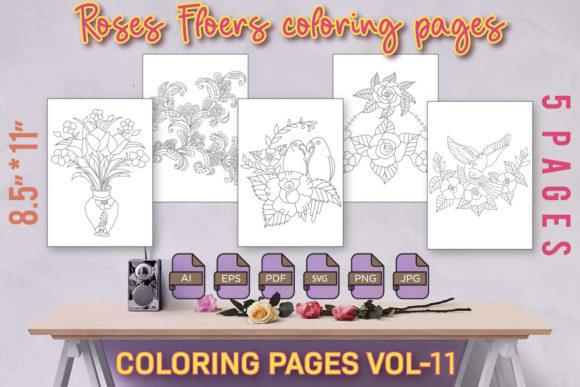
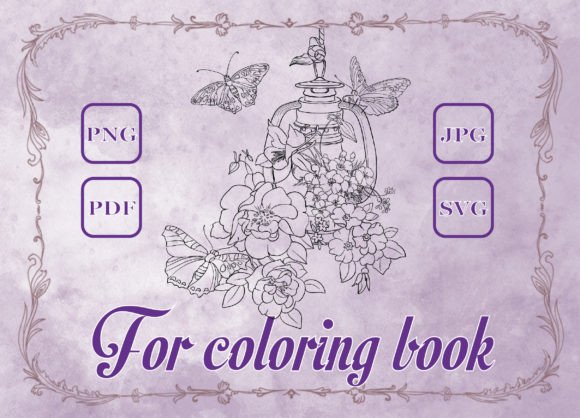
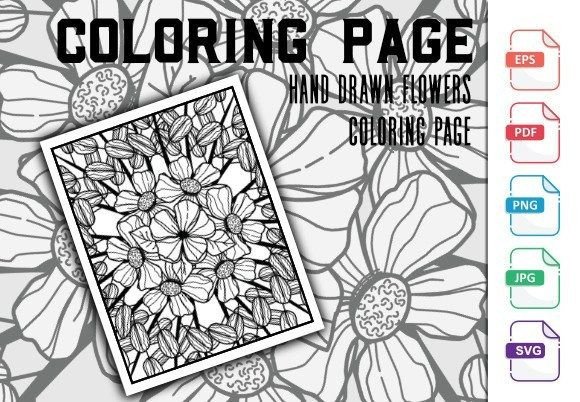
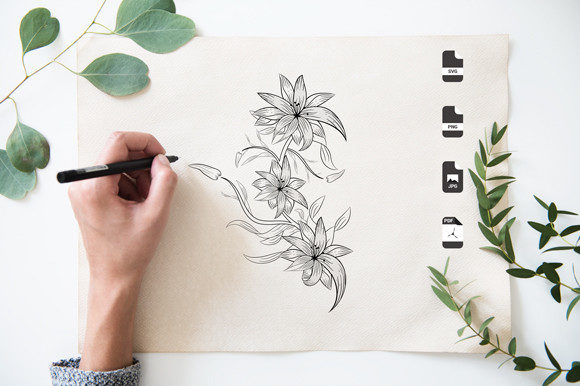
The moment I opened the file, the organic, slightly imperfect line quality set the tone. This isn’t a stiff vector rose you’ve seen a hundred times on stock sites. The Adults Hand Drawn Flower Coloring Page has a sketch-like rhythm, with petals that feel like they were drawn in one relaxed sitting. That matters enormously for embroidery. A design that already looks hand-rendered will forgive the tiny micro-shifts that happen with thread tension, and it will actually look more charming after it’s stitched. The file includes a high-resolution 4000 px × 4000 px image, so even zoomed in, the lines are crisp enough to trace cleanly in digitizing software. The SVG is a gift for anyone who works with vector-based embroidery workflows, while the PNG and JPG give you flexibility for mockups or auto-digitizing tests.
My immediate thought was: this is a design that belongs on something tactile. It wants to be on woven cotton, heavy linen, or a soft canvas — not just printed on paper. The scale is generous, but because it’s a coloring page style, the actual subject is built from outlines rather than solid chunks. That means you can shrink it down for a patch without losing the airy feel, or enlarge it for a bold back-of-jacket statement without it becoming visually heavy.
Real Project Test: Imagining This on a Custom Boutique Tote
Let me ground this in a real scenario. I’m currently preparing a small batch of embroidered tote bags for a spring craft market. The customer base loves minimalist botanical aesthetics, the kind of thing that looks like a field sketch. I tested the Adults Hand Drawn Flower Coloring Page as a 6-inch wide design on the front pocket of a natural cotton canvas tote. In my digitizing preview, I converted the line art into a single-color running stitch, using a variegated olive-to-moss thread. The result on screen was exactly what I wanted — a delicate, almost pen-and-ink look that didn’t overpower the bag’s texture.
What struck me was how the open center of the bloom and the loosely drawn leaves created natural breathing room. Too many embroidery designs cram detail into every inch, and the needle just can’t resolve it gracefully. Here, the negative space works with the fabric instead of fighting it. I knew immediately this would also translate beautifully to a cream linen pillow cover, a soft cotton apron, or even a lightweight baby swaddle blanket if scaled down gently. The design’s personality is calm, a little nostalgic, and deeply appealing to anyone who loves adult coloring aesthetics turned into wearable art.
Stitching Reality: What Works and What Needs a Careful Hand
As with any graphic originally created as a coloring page, you have to think about how the lines will become stitches. Running stitch is the natural choice here. It’s fast, elegant, and preserves the sketch feel. But you need to check your stitch length: go too short and you lose the hand-drawn flow; too long and the petals can look jagged. I always test on a scrap of the exact fabric I’ll use, with the same stabilizer. For that tote bag, a medium-weight cutaway stabilizer kept the stitches crisp without making the design stiff.
Small details often hide in the inner curves of the flower. I noticed a few tight whorls near the center that could pucker on a lightweight knit if you’re not careful. On a sweatshirt, I’d add a water-soluble topper to keep those tiny lines from sinking into the fleece. The design is not overly dense, but because it’s all outline, you also have the freedom to add a subtle fill stitch behind the petals if you want a more solid look for a patch. I’d personally keep it as a pure line art embroidery, because that’s where this design really shines.
One thing to watch: the drawing is detailed, but not microscopic. If you try to squeeze it into a 2-inch hoop for a baby onesie, some of the inner petal connections might blur. I’d recommend a minimum width of 4 inches for most fabrics, and even larger on textured surfaces like a kitchen towel. The design’s high resolution means you can upscale it without losing quality, but the embroidery physics of thread thickness still apply. Always run a stitch-out on the intended material before committing to a batch of finished products.
Commercial Viability: Does This Design Help You Sell?
The product listing says Flower Coloring Page For Personal, Commercial or KDP Business, which opens a lot of doors. For an embroidery small business, that means you can sell finished items like embroidered tote bags, framed hoop art, or custom apparel without worrying about licensing headaches — though I always advise double-checking the exact terms with the seller just to be safe. The Adults Hand Drawn Flower Coloring Page brings a clear market advantage: it taps into the same audience that loves adult coloring books, mindfulness crafts, and hand-drawn botanical journals. Pair it with a simple linen product and you’ve got a gift that feels both artistic and personal.
From an Etsy seller’s perspective, this design can be a workhorse. You can create a series of embroidery products using the same floral motif — a patch, a zip pouch, a tea towel, a cap — and your shop instantly looks cohesive. The SVG and PNG files also let you generate realistic digital mockups for your listings, which boosts buyer confidence. I’ve already tested a black-and-white mockup with the high-res JPG, and it showed the stitch definition beautifully against a dark background, proving the design can work across light and dark fabrics if you adjust thread color contrast.
Where It Fits Best — and Where It Fights Back
This design has a clear sweet spot: flat or gently curved surfaces that let the line art breathe. Tote bags, pillow covers, aprons, and wall hangings are ideal. It also works surprisingly well on a structured cap if you position it on the front panel and keep the design within a 4-5 inch area, though I’d avoid the curved side seams. On a sweatshirt, placement over the chest feels intimate and cottagecore-perfect. I’d hesitate to use it on highly stretchy performance fabrics or heavily textured terry cloth without significant testing — the delicate lines can get lost or distorted.
For baby items, the open, non-bulky stitch structure is a bonus because it won’t irritate sensitive skin, but you’ll want to back it with a soft fusible interfacing to prevent thread ends from scratching. As a holiday gift item, imagine this stitched on a cream linen pillow with a subtle sage thread — it becomes a gift that feels handmade in the best possible way, not homemade in a rushed sense.
The Designer’s Cheat Sheet: Practical Notes Before You Stitch
If you’re about to use the Adults Hand Drawn Flower Coloring Page in your next embroidery project, here’s what I’d suggest keeping in mind:
- Test on scrap fabric first. This is non-negotiable. The way the lines interact with your thread brand and hooping tension can’t be predicted from a screen.
- Thread color contrast is everything. A dark olive on natural linen feels sophisticated; a bright white on a black tote becomes bold and modern. The line art style lets you play with mood.
- Check your hoop size. The 4000 px square source gives you a lot of latitude, but for embroidery, scale the design to a comfortable hoop, leaving at least 1 inch of clearance on all sides.
- Review small details at actual stitch size. Zoom in on the SVG and trace the most intricate petal overlaps. If they look too tight, simplify them slightly during digitizing.
- Use the right stabilizer. For most woven fabrics, a medium cutaway will do the job. For knits, add a temporary adhesive spray and a topper to keep the fine lines crisp.
- Test in black and white mockups. Convert the PNG to grayscale and place it on a photo of your product. This will instantly show whether the design holds its visual weight.
- Confirm licensing before selling finished items. While the listing mentions commercial use, I always recommend a quick message to the seller to ensure your specific use case is covered.
Why This Design Feels Like a Quiet Asset
There’s a certain trust a buyer feels when they see a hand-drawn design stitched on a product. It signals that someone cared about the details. The Adults Hand Drawn Flower Coloring Page carries that intention beautifully. It doesn’t try to be a perfect, geometric bloom. It’s a little asymmetrical, a little free, and that’s exactly why it stands out in a marketplace flooded with hyper-polished vector florals. When I think about branding for a small handmade shop, this kind of design helps build a consistent, recognizable aesthetic that customers remember.
For a designer who creates custom apparel or personalized gifts, having a versatile floral like this in your library means you’re never starting from scratch. You can adapt it from a tote bag design to a wedding handkerchief detail with minimal effort. The included PDF, JPG, PNG, and SVG formats mean you’re not locked into one workflow. The SVG is particularly valuable for embroidery digitizers who use software that imports vector paths directly.
Final Stitch: Would I Run This on a Real Project?
Yes, without hesitation. I’d digitize it as a running stitch outline, choose a thread that feels earthy and natural, and pair it with simple, high-quality fabrics. I’d feel confident presenting it to a client as a custom tote bag, a set of linen napkins, or a framed embroidery hoop piece for a baby nursery. The design’s quiet charm translates into a finished product that doesn’t need to shout, and that’s a rare thing. It’s not a beginner’s iron-on patch with a thousand tiny satin stitches begging to unravel. It’s a thoughtful, artistic design that rewards careful digitizing and a good eye for fabric and thread.
If you’re an embroidery designer, a craft business owner, or an Etsy seller looking for a floral that feels personal and adaptable, the Adults Hand Drawn Flower Coloring Page is worth a serious look. Just remember to test, respect the scale, and let the hand-drawn character do the talking.